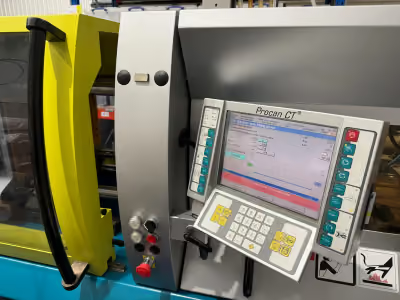
Low volume manufacturing has become an increasingly significant aspect of the production industry, catering to the unique needs of businesses that require smaller quantities of products. This approach is particularly beneficial for startups, companies testing new products, and those operating in niche markets. By focusing on low volume production, manufacturers can offer greater flexibility, reduced costs, and faster time to market, providing an essential service in today’s fast-paced economic landscape.
Understanding Low Volume Manufacturing
Low volume manufacturing refers to the production of a limited number of units, typically ranging from a few hundred to a few thousand, depending on the nature of the product and the industry requirements. This type of manufacturing is ideal for:
- Prototype development
- Market testing
- Custom or personalized products
- Specialized industry needs
While traditional mass manufacturing focuses on producing large quantities at a lower cost per unit, low volume manufacturing prioritizes flexibility and adaptability. Find additional information here.
Advantages of Low Volume Manufacturing
There are several advantages to opting for low volume manufacturing, which make it an attractive option for many businesses:
Flexibility and Customization
Low volume manufacturing allows for a high degree of customization, making it easier to tailor products to specific customer needs or market demands. This flexibility can be crucial for companies looking to differentiate themselves in competitive markets. Explore further insights here.
Reduced Costs and Risks
By producing smaller batches, companies can reduce the financial risks associated with large-scale production. This approach minimizes inventory costs and reduces the potential for overproduction. Moreover, it allows businesses to quickly adapt to market changes without being burdened by excess stock. Learn more in this detailed guide.
Faster Time to Market
With the ability to produce and deliver products in smaller batches, businesses can bring their offerings to market more quickly. This is particularly beneficial for companies that need to respond rapidly to emerging trends or customer feedback. Read more about this topic.
Challenges in Low Volume Manufacturing
Despite its benefits, low volume manufacturing also presents certain challenges that companies must navigate:
- Higher per-unit production costs compared to mass manufacturing
- Limited economies of scale
- Complex logistics and supply chain management
- Potential inconsistencies in product quality
To overcome these challenges, businesses must carefully plan their production processes and maintain strong relationships with suppliers and manufacturers. Learn more in this detailed guide.
Conclusion
Specializing in low volume manufacturing offers a strategic advantage for companies seeking to remain agile in a dynamic market environment. By understanding the benefits and challenges associated with this production approach, businesses can make informed decisions that align with their operational goals. As the demand for customized and rapidly deployable products continues to grow, low volume manufacturing will play an increasingly vital role in the industry’s future. Read more about this topic.
About the Author


